
Who is that?
On trees and the limits of science

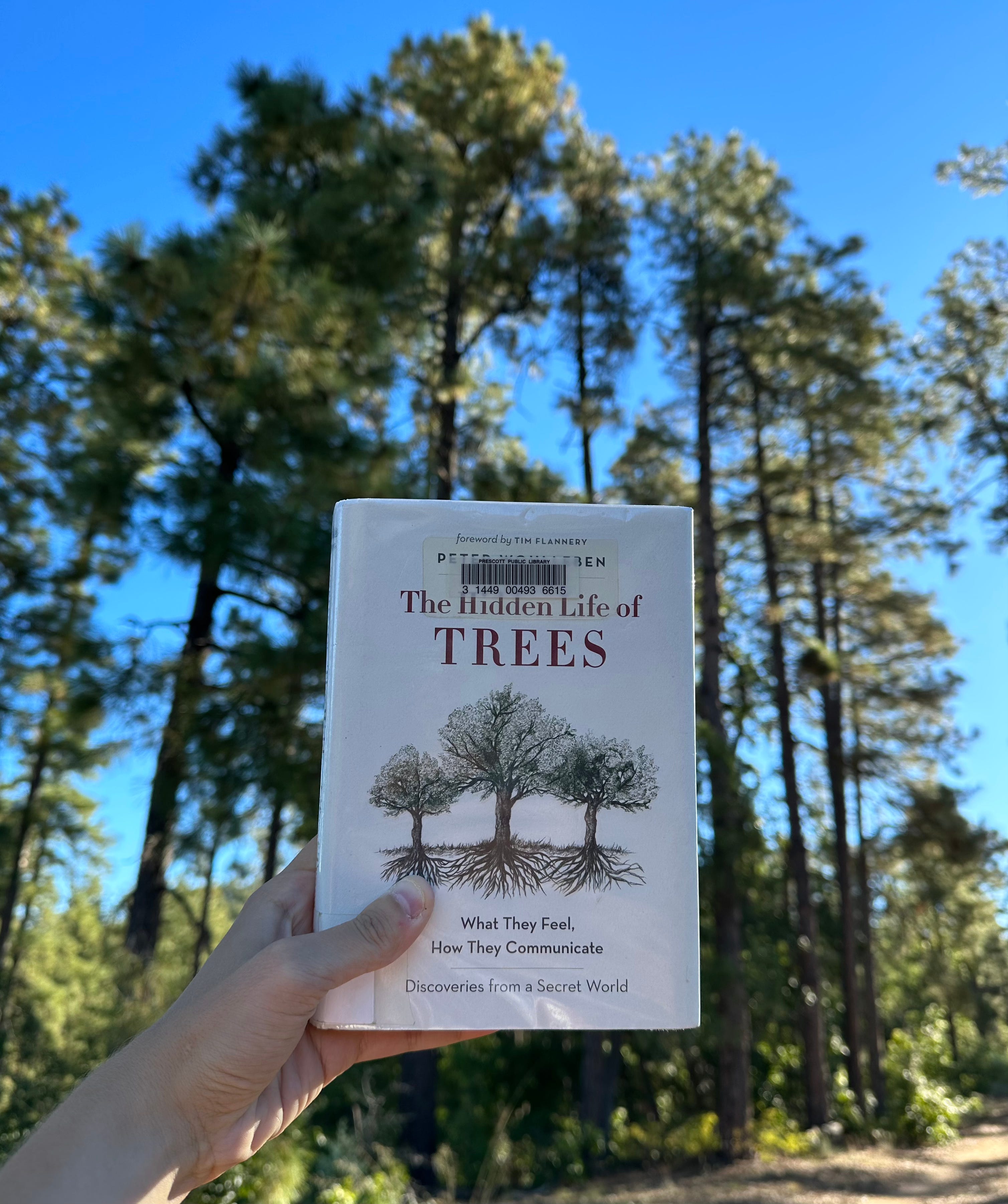
In The Hidden Life of Trees: What They Feel, How They Communicate (2015), popular science author Peter Wohlleben makes an argument so provocative that German scientists launched a petition challenging its scientific basis. The petition received over 4,500 signatures from biologists, forestry professionals, and “concerned citizens.” Wohlleben’s outrageous claim: that trees are intelligent, sentient, social beings with the same rights to live healthy, happy lives as animals and humans.
The anthropomorphic language Wohlleben uses to describe the lives of trees in his book is striking. In his enchanting forest, trees perceive the world, talk about it with each other, mourn their dead, raise their young, learn from their mistakes, express their individuality, make choices, and feel pain. They get their food via photosynthesis rather than consuming other living things, and they live on a much longer and slower time scale than we do – these are the only two factors that make them appear so unlike us and other animals. But if we take the time to really observe them – as Wohlleben has, working in forestry and forest management for over 30 years – we can begin to understand the world on their terms, and find it is every bit as sophisticated as our own.
The petition from scientists describes Peter Wohlleben’s text as “a collection of half-truths, biased judgements, and wishful thinking” that will lead the layperson to a “distorted understanding of forests and forestry.” One would think that this means Wohlleben seriously misrepresents certain scientific findings. But I found no specific accusations of this sort in the petition or critical reviews – as far as I, a mere unscientific layperson, can tell, Wohlleben’s distillations of scientific results are sound. He cites dozens of influential peer-reviewed scientific papers and accurately represents their findings. What makes scientists unbearably uncomfortable is not that Wohlleben is getting science wrong, but that he’s using hard science as a jumping-off-point for speculation about the inner lives of trees. This is 90% of what makes this book delightful and unforgettable.
The Hidden Life of Trees opens with an observation. Wohlleben noticed a beech tree stump in his forest was still living, with a green layer of live, growing tissue beneath its bark, even though the tree had been felled years ago. A tree stump of course has no leaves where photosynthesis can take place – the only way it can stay alive is if its neighboring trees charitably support it, sending it nutrients via their root networks.
Now this is not something made up or science misunderstood by Wohlleben. This is a widely documented phenomena among diverse tree species. What scientists object to is where Wohlleben goes from there. Why would trees support a stump that is unproductive? he asks. We know that trees help each other out all the time during their lives in an undisturbed, interconnected forest. They form symbiotic relationships with a diverse array of fungi who connect their roots and pass nutrients, chemicals, and electrical signals between them, in a network that has been termed “the Wood Wide Web.” But there’s no logical reason or evolutionary benefit that we know of to sacrificing some of your precious resources to support a stump – it doesn’t increase the fitness of the individual tree or the community of living trees. This points to an attachment between trees beyond rationality – something akin to love. This stump could very well be the parent tree or the childhood best friend of these neighboring trees who remain alive, and perhaps they’re not ready to let go.
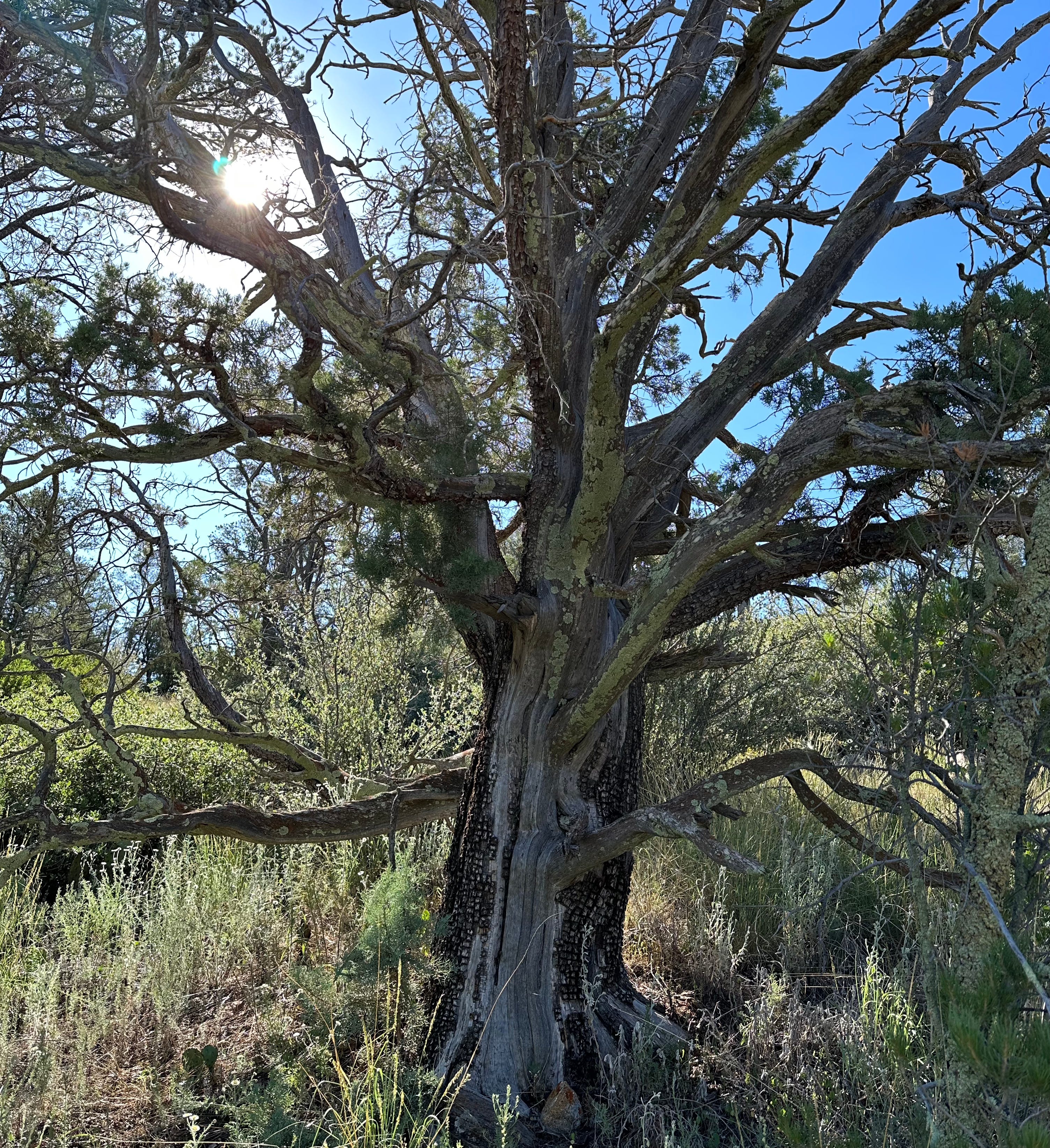
It’s this attribution of emotion and intention to what could be neutral, random phenomenon that infuriates the scientists. But I say, as Wohlleben does, what would be so dangerous and terrible about believing that trees love each other? Would the world fall to pieces if more people respect the autonomy and complexity of the forests around them, rather than treating them like commodities? No, it would likely be all the better for it, even if trees loving each other is not something that Wohlleben can “prove” to the standards of science.
“Right now, the majority of plant researchers are skeptical about whether such behavior points to a repository for intelligence, the faculty of memory, and emotions. Among other things, they get worked up about carrying over findings in similar situations with animals and, at the end of the day, about how this threatens to blur the boundary between plants and animals. And so what? What would be so awful about that?... Sometimes I suspect we would pay more attention to trees and other vegetation if we could establish beyond a doubt just how similar they are in many ways to animals.”
- Peter Wohlleben, “The Hidden Life of Trees”
The Hidden Life of Trees enchantingly blends the astounding results of science with speculations on what they might tell us about the inner lives of trees. I don’t think Wohlleben speculates for the sake of being fanciful – he builds from where science necessarily leaves off, asking questions about what it means to love, to think, to feel, and ultimately to be conscious. Whereas science is limited to empirical observation, which leaves behind heavily connoted, intrinsically human concepts like “love”, Wohlleben does not limit his analysis to the objective. He pursues the connects he sees between tree behavior and frameworks of human relationships, a powerful rhetorical move that inevitably transforms how we encounter trees.
Another example – in the chapter “A Question of Character,” we learn that science can tell us, objectively, that individual trees of the same species are dramatically more genetically diverse than individual humans. The differences between them are as large as the differences between animals of different species! Because it takes so long to bring up a new generation of trees, trees must be incredibly adaptable individuals, different enough that no one threat can wipe them out.
Now, we prize our individuality and our sense of autonomy as features that make us uniquely human – but Wohlleben argues that trees have individual personalities too, which manifest in their behavior. He uses an example of observing three hundred-year-old oaks of the same species growing side by side in the same conditions. One would think the trees would respond to these conditions in a similar fashion, but Wohlleben watched the three trees lose their leaves for the winter at three completely different times.
Dropping leaves at one time during the year or another is not an arbitrary, mechanical act. It’s a complex wager. Trees that drop their leaves too early may miss out on precious days, weeks, or months of photosynthesizing and storing sugars. However, trees that hold onto them for too long so they are hit by the first frost will lose all the crucial chlorophyll and other compounds contained in green leaves. This will cost them dearly when it comes time to regrow their leaves in the spring. Wohlleben thus attributes these different responses, which he would describe as choices, to the individual personalities of the trees – some are more conservative and play it safe, while others are bigger risk-takers. Once again, this anthropomorphization of the results of genetic difference disturbs the scientists, who see it as distorting reality.
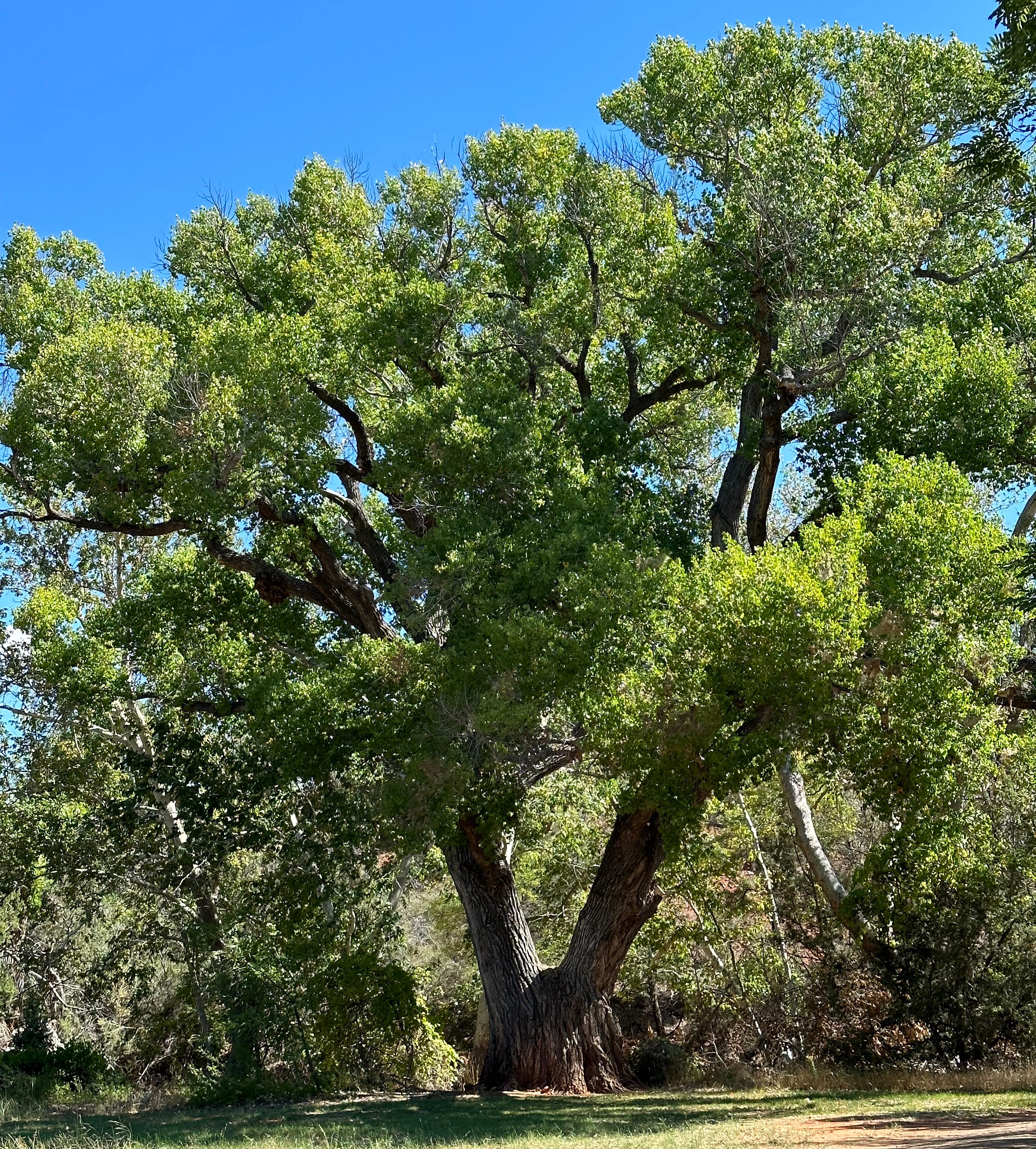
Whether you buy into his anthropomorphic language or not, this book answered so many basic questions I had about trees in accessible yet scientifically-informed terms. And I do suggest you embrace the anthropomorphic language of the book rather than rage against it, because its intention is to make the science of trees accessible, comprehensible, and emotive, and I found that it succeeded in this.
For example, it’s easier to remember why trees that grow fast die young when you connect it to our human experience of burnout and the old adage “slow and steady wins the race.” Like human parents, parent trees in an old-growth forest shade their young offspring growing at their feet to prevent them from growing too fast – what feels like a punishment to the young sapling who is only getting a tiny bit of light to work with is actually the recipe for a long and healthy life. And of course, on the flip side, the parent tree is always there to share nutrients with the sapling if it begins growing too slowly. Like human parents, tree parents both assist and put limits on their offspring to create the best future for them that they can.
Other questions this book answered for me include, why does it make ecological sense for some trees to lose their leaves and others to keep them? What makes leaves change color before they fall? Why is the chlorophyll in leaves green? Why are trees shaped like that? And how do trees pull water from their roots all the way up to their leaves?
That last question is particularly interesting because Wohlleben argues that we do not scientifically understand how this happens at all. The usual explanations you may have heard in biology class – capillary action and transpiration – have been shown to not account for all the force needed to get that water hundreds of feet into the air. Scientists who signed the petition against The Hidden life of Trees call this book, “further proof of the sad situation that oversimplification and emotional explanations of complex matters are better received by a wide audience than factual information generated by thorough investigations.” But as we can see in this example, Wohlleben happily underscores complexities that scientists often gloss over because they are hell-bent on having a sound objective explanation for everything. Like Wohlleben, I don’t find this lack of explanation for such a simple, mechanical phenomena frustrating – I find it delightful, liberating, and possibly magical. “So many questions remain unanswered. Perhaps we are poorer for having lost a possible explanation or richer for having gained a mystery. But aren’t both possibilities equally intriguing?” (59)
The petition against Wohlleben’s book claims, “In the long-term, the environment in general and forests in particular will not be helped by the sort of unenlightened thinking promoted by the hidden reality of this book.” To which I’d respond, why the hell not? The idea that plants, who have inhabited this Earth far longer than we have, have great wisdom and much to teach us about living, is not some nonsense Wohlleben has invented. It is literally how indigenous peoples’ epistemologies functioned throughout human history. Robin Wall Kimmerer – distinguished botanist, enrolled member of the Citizen Potawatomi Nation, and MacArthur Genius fellow – wrote her New York Times bestselling book Braiding Sweetgrass about the value that exactly this sort of “unenlightened thinking” can bring us when coupled with the scientific method of knowing. The notion that all valid knowledge comes from the scientific method developed during the Enlightenment is fundamentally Eurocentric and invalidates the knowledge that many more ancient practices of inquiry have to offer us. I think Wohlleben’s long history of observing and cultivating relationships with trees has led him to a spiritual attunement to the direct teaching power of trees, which is not a contradiction of science but an enrichment of it.
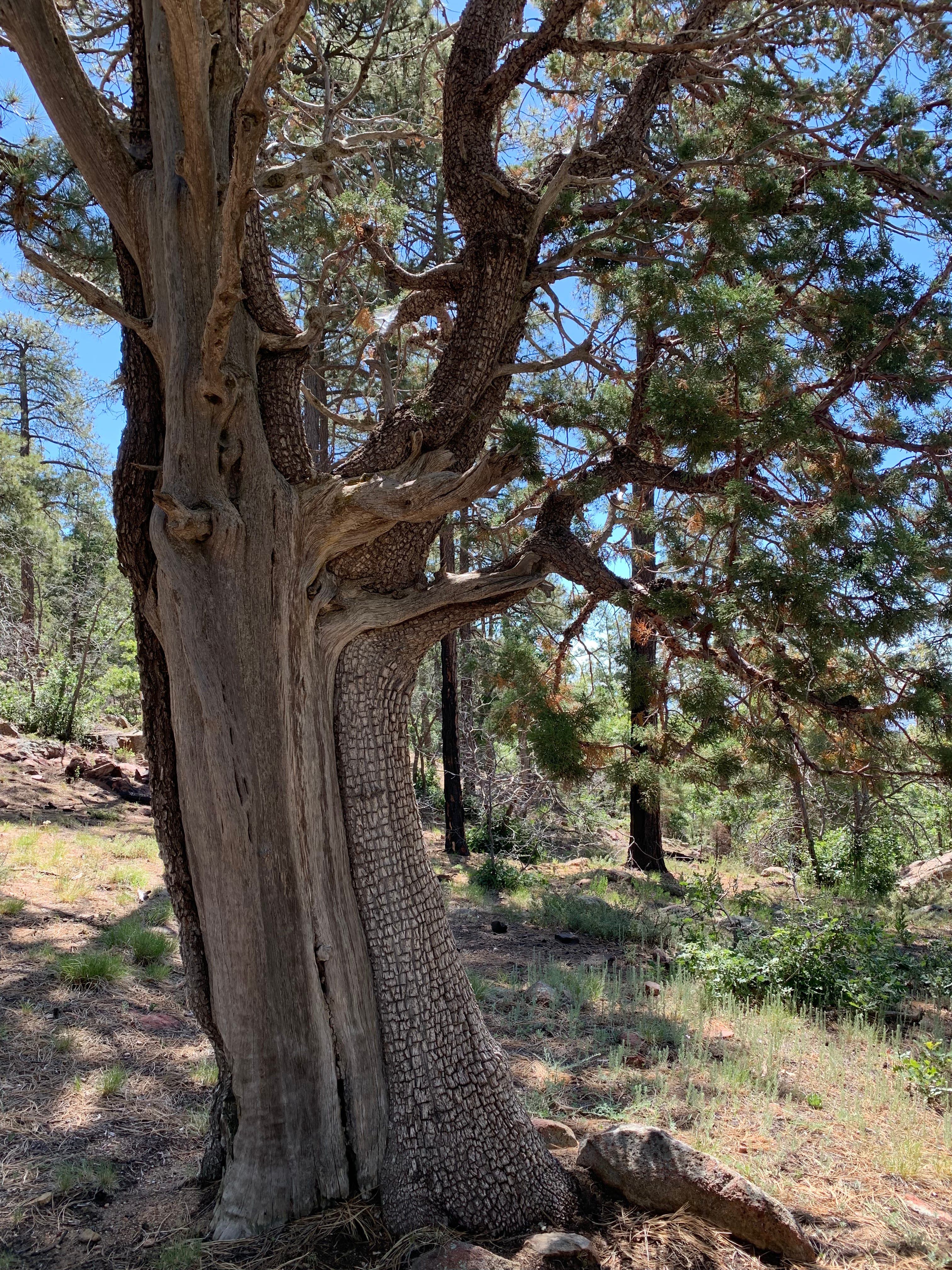
At the STEM magnet high school I attended junior and senior year, everyone was obsessed with getting research experience in the narrow form of lab work that could lead to publishable scientific papers. I found lab work excruciatingly boring, and this turned me away from STEM for the duration of my college years. But my present experience working at a nonprofit dedicated to natural history has brought me back around to the love of science I’ve always had. When science is presented as the only valid and valuable framework through which we can ask and respond to questions, I find it frustratingly limiting. But in natural history, science meets the arts and humanities on equal footing to create an integrated practice of engaging with and understanding nature. Science is not something that only happens in the sterile white walls of a lab, but out in messy and contextualized spaces of nature, where we can ask questions of our greatest teacher directly and make observations to answer them. Natural history is allowing me to understand the world around me in a place-based, context-rich manner that I’m finding more compelling than science or the arts and humanities on their own.
I think these scientists who accuse Wohlleben of being unenlightened and dangerous are arrogantly invalidating the knowledge that comes from his long-term personal experience with the German forests he has tended to and the indigenous commitment he has developed to the health of the forests beyond the span of his own life. Nonetheless, certain critics of this book have a valid concern about an over-reliance on anthropomorphization. It is a troubling human tendency, this need to establish that something or someone is relatable, is like us, in order to cultivate empathy with them. How can we understand trees are beings who live radically differently from us and yet are equally deserving of life, liberty, and the pursuit of happiness, rather than overstating their likeness to us as a means of empathizing with them?
As much as I enjoy critiquing science and our societal obsession with it, I was reminded of its grounding value during a botany workshop I attended on Saturday, about the Asteraceae plant family. This largest family of flowering plants was once known as the Composites because every flower in it is actually a composite of many tiny flowers. The sunflower is the classic example of an Aster – its large brown center is actually hundreds of individual flowers called disc flowers, complete with its own set of male and female reproductive parts. Each of its yellow petals are also individual flowers, called ray flowers – if you pluck one out, you can sometimes make out a tiny bifurcated stigma, the female reproductive part, at the base. Knowing this transforms the way you look at dandelions, daisies, thistles, marigolds, and the countless other common flowers in the Aster family.
In the workshop, we spent hours with our hand lenses and dissecting microscopes, learning the unique terms scientists have coined for all the different parts of these marvelously intricate flowers, what they do, where to find them on the flower, and how to describe the flower in this new botanical language. Our brilliant instructor Sue Smith, who has created an incredibly easy-to-use searchable database of all native plants in our county, had her botanical dictionary on hand, which is about as thick as an abridged English dictionary. Afterwards, I found myself looking much more intently at every flower I passed by, trying to make out and name its parts and visualizing how they work together to produce new plants. My wonder and appreciation for flowers has been so greatly enriched, not because of any way in which they are similar to me, but because I’m learning how to describe them in their own unique terms.
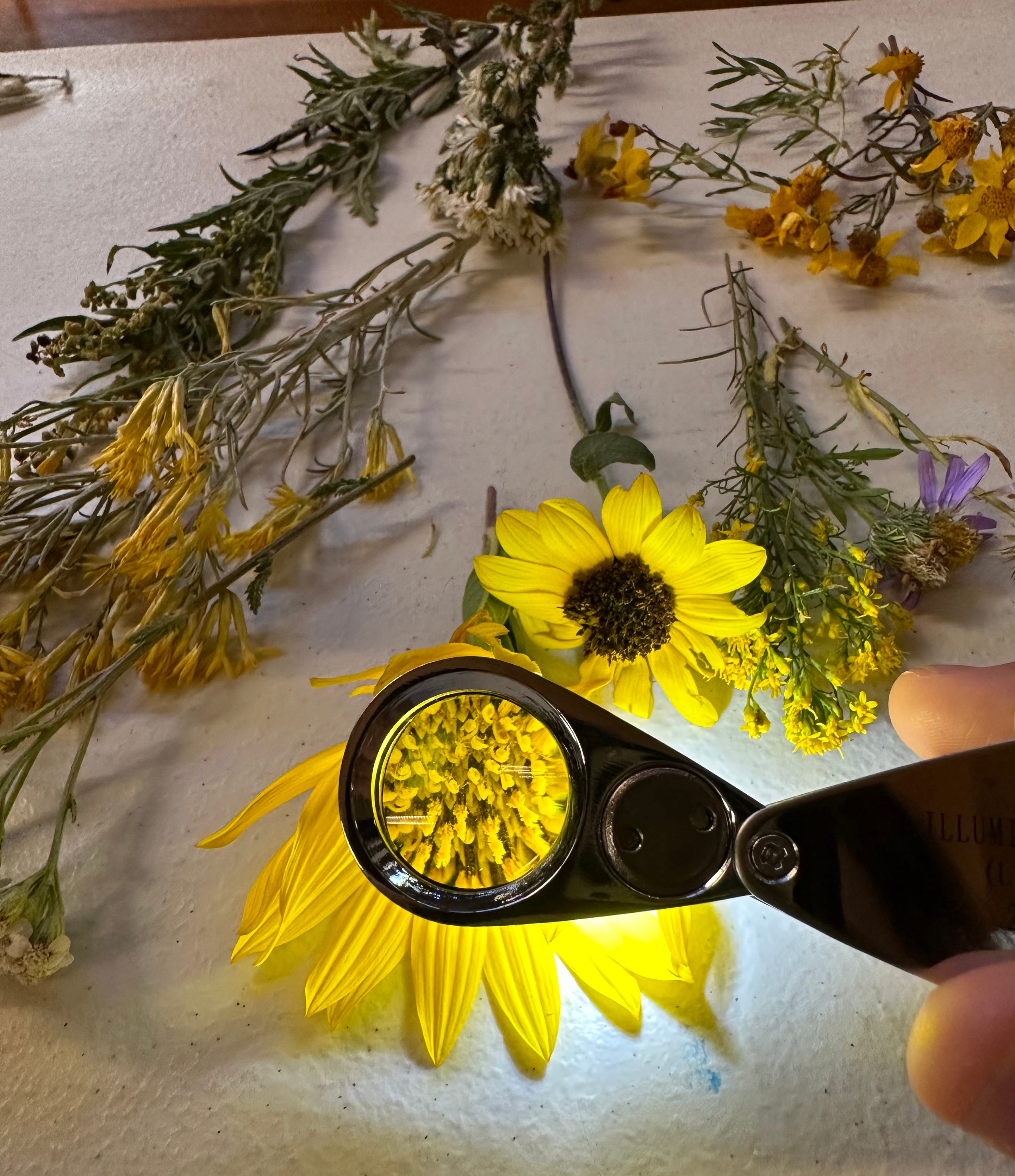
When I walk with Sue, she knows all the scientific names of every plant we pass, understands their strategies for survival, and can describe all their parts in botanists’ language. At the same time, when I ask her about a flower, she doesn’t tell me where she first saw it, but where she first met it. I have remarked this consistently amongst my naturalist friends – when they hear an unfamiliar bird calling from the treetops or see a lizard skitter across the path, they don’t ask what it is, but who it is. They have let go of a scientist’s tendency to objectify the natural world in order to describe it and understand it as an object. They use language that acknowledges that other creatures, whether plants, animals, or fungi, are not just objects of study, but fellow beings with subjectivity, who we can encounter as equals and who we can build emotional relationships with. I think it is extremely important to do this – to leave behind the imperial attitude of Enlightenment science, which seeks to understand everything in order to control it and own it, and to move into a science that is more akin to Wohlleben’s approach to trees. This approach holds space for our subjective, personal relationships with what we seek to understand, and the elusive, impenetrable subjectivity of the other, which we can respect and even delight in rather than seeking impossibly to dissolve.
To the scientists so concerned about the scientifically unfounded musings in Wohlleben’s book, I would say, I don’t need to know that trees feel pain to not want to harm them unnecessarily. It’s enough that science can show me a wound to bark is a comparable phenomenon as a wound to skin – it must be healed quickly, or else bacterial and fungal agents of decay will get in and consume the tree from the inside out. I think it’s beautiful that Wohlleben draws out embodied connections like these between our lives and the lives of trees.
To scientists who worry that Wohlleben’s personification of trees prevents us from understanding trees’ reality on their terms, I think their concern is valid, but I would ask what they’re doing to make this kind of tree science accessible to the public. Wohlleben was criticized for presenting things that scientists have known for decades as groundbreaking discoveries, but they are groundbreaking to the general public who could learn of them through Wohlleben’s book for the first time. That is the essential value of scientific communication.
Ultimately, Wohlleben’s long-term experience stewarding forests and observing them in context has value that is distinct and no less important than the experience of someone with a PhD and lots of papers published on trees. In fact, I think it’s even more valuable, for trees are social beings who live completely differently in the context of the forest than they do in isolation. This is the democratizing value of naturalism as a science – the best way to practice it is not in the walls of some lab which requires an expensive degree to ever get access to, but by simply going out there, into whatever nature you have regular access to, observing and asking – who is that?
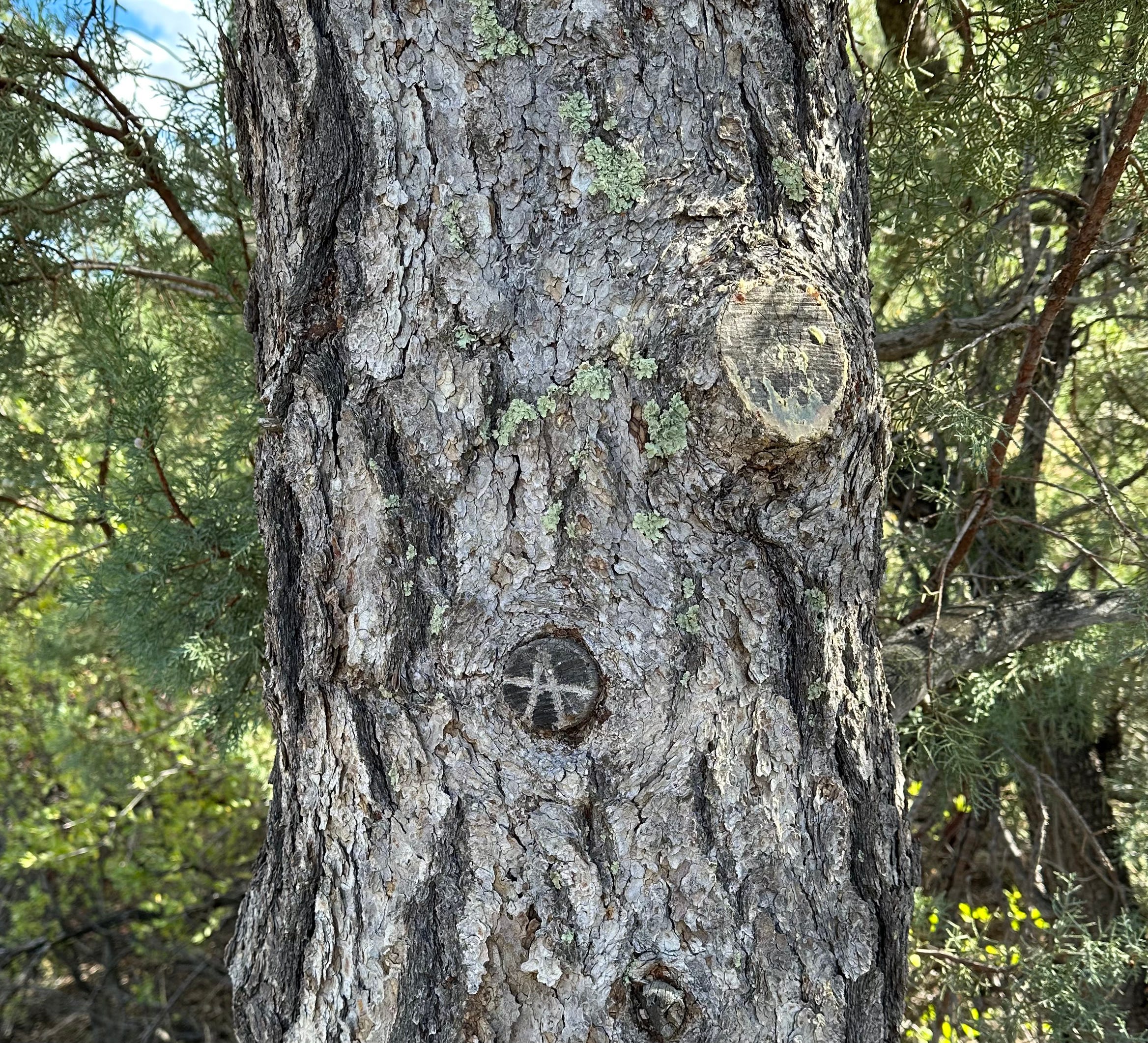
Wowow why did this make me emotional!! This was so beautiful. I am so eager to read this book now! Also love seeing the alligator junipers! I don’t think I’ve seen those! Anyway thank you for writing this essay so thoughtfully 🙏🏼
I love your question about what scholars are doing to bridge the gap. Academia is often so good at pointing fingers and labeling shortcomings...without offering anything in their place or bringing any actionable awareness to the questions at hand. Amazing essay!!